None Dare Call it Conspiracy by Gary Allen with Larry Abraham

none-dare-call-it-conspiracy

In 1971, Allen wrote with Larry Abraham a book titled None Dare Call It Conspiracy (prefaced by U.S. Representative John G. Schmitz of California’s 35th congressional district and the nominee of the American Independent Party in the 1972 U.S. presidential election). It sold more than four million copies[9] during the 1972 presidential campaign opposing Nixon and U.S. Senator George S. McGovern.[10]

In this book, Allen and Abraham assert that the modern political and economic systems in most developed nations are the result of a sweeping conspiracy by the Establishment‘s power elite, for which he also uses the term Insiders. According to the authors, these Insiders use elements of Karl Marx‘s Communist Manifesto to forward their socialist/communist agenda:

  1. Establish an income tax system as a means of extorting money from the common man;
  2. Establish a central bank, deceptively named so that people will think it is part of the government;
  3. Have this bank be the holder of the national debt;
  4. Run the national debt, and the interest thereon, sky high through wars (or any sort of deficit spending), starting with World War I.[11]

He quotes the Council on Foreign Relations as having stated, in its study no. 7 : “The U.S. must strive to: A. BUILD A NEW INTERNATIONAL ORDER.” (Capitals in the original).[12]

Allen wrote other books about the Council on Foreign Relations and the Trilateral Commission, asserting that the term “New World Order” was used by a secretive elite dedicated to the destruction of all national sovereignties.[13]

Allen’s last book, Say “No!” to the new world order, was published posthumously in January 1987.

Investigative reporter Chip Berlet argues that Allen’s work provides an example of a synthesis of right-wing populism and conspiracism, a blend of ideas known as producerism.[14]

Source: https://en.wikipedia.org/wiki/Gary_Allen


ANTIFA: The truth behind the mask 

A look into the domestic terror organization ANTIFA and how it is attempting to take over the current peaceful protests of the George Floyd death. Information regarding college and university classes highlighting grievances and fostering anger and potential violence. 

#FoxNews

ANOTHER TOP EXPERT: LOCKDOWN IS “UTTER NONSENSE”-USC Senior Fellow, Joel Hay PhD

USC Senior Fellow, Joel Hay PhD, has authored more than 600 peer-reviewed scientific articles & reports on health economics, outcomes research and epidemiology. He sat down with Del for an eye-opening, no holds barred conversation about why he thinks the lockdown is “utter nonsense” and fears the gov’t will “double down on this horrible strategy” to avoid admitting they were wrong.

#LockdownNonsense #OpenTheWorld #OpenAmerica

Don’t Read These Books – LewRockwell

1. Plague of Corruption: Restoring Faith in the Promise of Science (Children’s Health Defense)– Judy Mikovits

2. Fauci: The Bernie Madoff of Science and the HIV Ponzi Scheme that Concealed the Chronic Fatigue Syndrome Epidemic– Charles Ortleb

3. The Miraculous Results Of Extremely High Doses Of The Sunshine Hormone Vitamin D3 My Experiment With Huge Doses Of D3 From 25,000 To 50,000 To 100,000 Iu A Day Over A 1 Year Period– Jeff T Bowles

4. The Natural Law: A Study in Legal and Social History and Philosophy– Heinrich Rommen

5. Dissolving Illusions: Disease, Vaccines, and The Forgotten History– Suzanne Humphries

6. Jabbed: How the Vaccine Industry, Medical Establishment, and Government Stick It to You and Your Family– Brett Wilcox

7. Fire Your Doctor! How to Be Independently Healthy– Andrew Saul

8. Plague: One Scientist’s Intrepid Search for the Truth about Human Retroviruses and Chronic Fatigue Syndrome (ME/CFS), Autism, and Other Diseases– Kent Heckenlively

9. Dominion: How the Christian Revolution Remade the World– Tom Holland

10. Good-Bye Germ Theory: ending a century of medical fraud– William Trebing

11. Vitamin D3, Zinc and Magnesium: HOW TO PREVENT MANY OF THE CURRENT HEALTH EPIDEMICS (Dr. Jeffers)– Nancy Jeffers

12. Be Ready for Anything: How to Survive Tornadoes, Earthquakes, Pandemics, Mass Shootings, Nuclear Disasters, and Other Life-Threatening Events– Daisy Luther

13. No Treason; The Constitution of No Authority: Three Essays – Lynsander Spooner

14. Surviving the Medical Meltdown: Your Guide to Living Through the Disaster of Obamacare– Lee Hieb

15. Finding George Orwell in Burma– Emma Larkin

Plague of Corruption: …Mikovits, JudyBuy New $16.51(as of 02:59 EDT – Details)Fauci: The Bernie Mado…Ortleb, CharlesBuy New $5.99(as of 02:55 EDT – Details)The Miraculous Results…Jeff T BowlesBest Price: $4.97Buy New $9.99(as of 01:50 EST – Details)The Natural Law: A Stu…Heinrich A. RommenBest Price: $7.00Buy New $8.00(as of 01:18 EDT – Details)Dissolving Illusions: …Bystrianyk, RomanBest Price: $38.50Buy New $21.60(as of 11:00 EDT – Details)Jabbed: How the Vaccin…Wilcox, BrettBest Price: $13.02Buy New $13.05(as of 03:50 EST – Details)Fire Your Doctor! How …Andrew SaulBest Price: $6.40Buy New $1.99(as of 11:00 EST – Details)Plague: One Scientist&…Mikovits, JudyBest Price: $29.55Buy New $17.99(as of 04:10 EDT – Details)Dominion: How the Chri…Holland, TomBest Price: $18.64Buy New $21.97(as of 04:13 EDT – Details)Good-Bye Germ Theory: …Trebing, Dr. William PBest Price: $36.69Buy New $14.00(as of 04:04 EDT – Details)Vitamin D3, Zinc and M…Jeffers, NancyBest Price: nullBuy New $6.98(as of 03:40 EST – Details)Be Ready for Anything:…Daisy LutherBest Price: $10.45Buy New $9.69(as of 07:15 EST – Details)No Treason; The Consti…Spooner, LysanderBest Price: $7.28Buy New $5.99(as of 06:20 EST – Details)Surviving the Medical …Hieb, LeeBest Price: $3.00Buy New $12.57(as of 12:08 EDT – Details)Finding George Orwell …Larkin, EmmaBest Price: $2.00Buy New $9.42(as of 02:44 EDT – Details)

Source: Don’t Read These Books – LewRockwell

Dr. Russell Blaylock: Face Masks Pose Serious Risks To The Healthy

Dr. Russell Blaylock warns that not only do face masks fail to protect the healthy from getting sick, but they also create serious health risks to the wearer. The bottom line is that if you are not sick, you should not wear a face mask.

As businesses reopen, many are requiring shoppers and employees to wear a face mask. Costco, for instance, will not allow shoppers into the store without wearing a face mask. Many employers are requiring all employees to wear a face mask while at work. In some jurisdictions, all citizens must wear a face mask if they are outside of their own home.  ⁃ TN Editor

With the advent of the so-called COVID-19 pandemic, we have seen a number of medical practices that have little or no scientific support as regards reducing the spread of this infection. One of these measures is the wearing of facial masks, either a surgical-type mask, bandana or N95 respirator mask. When this pandemic began and we knew little about the virus itself or its epidemiologic behavior, it was assumed that it would behave, in terms of spread among communities, like other respiratory viruses. Little has presented itself after intense study of this virus and its behavior to change this perception.

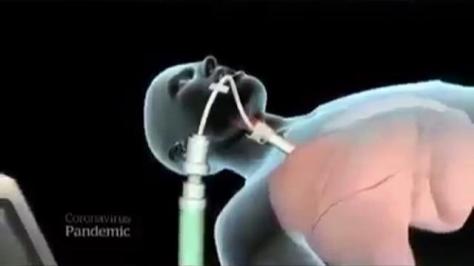
This is somewhat of an unusual virus in that for the vast majority of people infected by the virus, one experiences either no illness (asymptomatic) or very little sickness. Only a very small number of people are at risk of a potentially serious outcome from the infection—mainly those with underlying serious medical conditions in conjunction with advanced age and frailty, those with immune compromising conditions and nursing home patients near the end of their lives. There is growing evidence that the treatment protocol issued to treating doctors by the Center for Disease Control and Prevention (CDC), mainly intubation and use of a ventilator (respirator), may have contributed significantly to the high death rate in these select individuals.

By wearing a mask, the exhaled viruses will not be able to escape and will concentrate in the nasal passages, enter the olfactory nerves and travel into the brain.

Russell Blaylock, MD

As for the scientific support for the use of face mask, a recent careful examination of the literature, in which 17 of the best studies were analyzed, concluded that, “ None of the studies established a conclusive relationship between mask/respirator use and protection against influenza infection.”1   Keep in mind, no studies have been done to demonstrate that either a cloth mask or the N95 mask has any effect on transmission of the COVID-19 virus. Any recommendations, therefore, have to be based on studies of influenza virus transmission. And, as you have seen, there is no conclusive evidence of their efficiency in controlling flu virus transmission.

It is also instructive to know that until recently, the CDC did not recommend wearing a face mask or covering of any kind, unless a person was known to be infected, that is, until recently. Non-infected people need not wear a mask. When a person has TB we have them wear a mask, not the entire community of non-infected. The recommendations by the CDC and the WHO are not based on any studies of this virus and have never been used to contain any other virus pandemic or epidemic in history.

Now that we have established that there is no scientific evidence necessitating the wearing of a face mask for prevention, are there dangers to wearing a face mask, especially for long periods? Several studies have indeed found significant problems with wearing such a mask. This can vary from headaches, to increased airway resistance, carbon dioxide accumulation, to hypoxia, all the way to serious life-threatening complications.

There is a difference between the N95 respirator mask and the surgical mask (cloth or paper mask) in terms of side effects. The N95 mask, which filters out 95% of particles with a median diameter >0.3 µm, because it impairs respiratory exchange (breathing) to a greater degree than a soft mask, and is more often associated with headaches. In one such study, researchers surveyed 212 healthcare workers (47 males and 165 females) asking about presence of headaches with N95 mask use, duration of the headaches, type of headaches and if the person had preexisting headaches.2

They found that about a third of the workers developed headaches with use of the mask, most had preexisting headaches that were worsened by the mask wearing, and 60% required pain medications for relief. As to the cause of the headaches, while straps and pressure from the mask could be causative, the bulk of the evidence points toward hypoxia and/or hypercapnia as the cause. That is, a reduction in blood oxygenation (hypoxia) or an elevation in blood C02 (hypercapnia). It is known that the N95 mask, if worn for hours, can reduce blood oxygenation as much as 20%, which can lead to a loss of consciousness, as happened to the hapless fellow driving around alone in his car wearing an N95 mask, causing him to pass out, and to crash his car and sustain injuries. I am sure that we have several cases of elderly individuals or any person with poor lung function passing out, hitting their head. This, of course, can lead to death.

A more recent study involving 159 healthcare workers aged 21 to 35 years of age found that 81% developed headaches from wearing a face mask.3   Some had pre-existing headaches that were precipitated by the masks. All felt like the headaches affected their work performance.

Unfortunately, no one is telling the frail elderly and those with lung diseases, such as COPD, emphysema or pulmonary fibrosis, of these dangers when wearing a facial mask of any kind—which can cause a severe worsening of lung function. This also includes lung cancer patients and people having had lung surgery, especially with partial resection or even the removal of a whole lung.

While most agree that the N95 mask can cause significant hypoxia and hypercapnia, another study of surgical masks found significant reductions in blood oxygen as well. In this study, researchers examined the blood oxygen levels in 53 surgeons using an oximeter. They measured blood oxygenation before surgery as well as at the end of surgeries.The researchers found that the mask reduced the blood oxygen levels (pa02) significantly. The longer the duration of wearing the mask, the greater the fall in blood oxygen levels.

The importance of these findings is that a drop in oxygen levels (hypoxia) is associated with an impairment in immunity. Studies have shown that hypoxia can inhibit the type of main immune cells used to fight viral infections called the CD4+ T-lymphocyte. This occurs because the hypoxia increases the level of a compound called hypoxia inducible factor-1 (HIF-1), which inhibits T-lymphocytes and stimulates a powerful immune inhibitor cell called the Tregs. . This sets the stage for contracting any infection, including COVID-19 and making the consequences of that infection much graver. In essence, your mask may very well put you at an increased risk of infections and if so, having a much worse outcome.5,6,7

People with cancer, especially if the cancer has spread, will be at a further risk from prolonged hypoxia as the cancer grows best in a microenvironment that is low in oxygen. Low oxygen also promotes inflammation which can promote the growth, invasion and spread of cancers.8,9  Repeated episodes of hypoxia has been proposed as a significant factor in atherosclerosis and hence increases all cardiovascular (heart attacks) and cerebrovascular (strokes) diseases.10

There is another danger to wearing these masks on a daily basis, especially if worn for several hours. When a person is infected with a respiratory virus, they will expel some of the virus with each breath. If they are wearing a mask, especially an N95 mask or other tightly fitting mask, they will be constantly rebreathing the viruses, raising the concentration of the virus in the lungs and the nasal passages. We know that people who have the worst reactions to the coronavirus have the highest concentrations of the virus early on. And this leads to the deadly cytokine storm in a selected number.

It gets even more frightening. Newer evidence suggests that in some cases the virus can enter the brain.11,12 In most instances it enters the brain by way of the olfactory nerves (smell nerves), which connect directly with the area of the brain dealing with recent memory and memory consolidation. By wearing a mask, the exhaled viruses will not be able to escape and will concentrate in the nasal passages, enter the olfactory nerves and travel into the brain.13

It is evident from this review that there is insufficient evidence that wearing a mask of any kind can have a significant impact in preventing the spread of this virus. The fact that this virus is a relatively benign infection for the vast majority of the population and that most of the at-risk group also survive, from an infectious disease and epidemiological standpoint, by letting the virus spread through the healthier population we will reach a herd immunity level rather quickly that will end this pandemic quickly and prevent a return next winter. During this time, we need to protect the at-risk population by avoiding close contact, boosting their immunity with compounds that boost cellular immunity and in general, care for them.

One should not attack and insult those who have chosen not to wear a mask, as these studies suggest that is the wise choice to make.

References

  1. bin-Reza F et al. The use of mask and respirators to prevent transmission of influenza: A systematic review of the scientific evidence. Resp Viruses 2012;6(4):257-67.
  2. Zhu JH et al. Effects of long-duration wearing of N95 respirator and surgical facemask: a pilot study. J Lung Pulm Resp Res 2014:4:97-100.
  3. Ong JJY et al. Headaches associated with personal protective equipment- A cross-sectional study among frontline healthcare workers during COVID-19. Headache 2020;60(5):864-877.
  4. Bader A et al. Preliminary report on surgical mask induced deoxygenation during major surgery. Neurocirugia 2008;19:12-126.
  5. Shehade H et al. Cutting edge: Hypoxia-Inducible Factor-1 negatively regulates Th1 function. J Immunol 2015;195:1372-1376.
  6. Westendorf AM et al. Hypoxia enhances immunosuppression by inhibiting CD4+ effector T cell function and promoting Treg activity. Cell Physiol Biochem 2017;41:1271-84.
  7. Sceneay J et al. Hypoxia-driven immunosuppression contributes to the pre-metastatic niche. Oncoimmunology 2013;2:1 e22355.
  8. Blaylock RL. Immunoexcitatory mechanisms in glioma proliferation, invasion and occasional metastasis. Surg Neurol Inter 2013;4:15.
  9. Aggarwal BB. Nucler factor-kappaB: The enemy within. Cancer Cell 2004;6:203-208.
  10. Savransky V et al. Chronic intermittent hypoxia induces atherosclerosis. Am J Resp Crit Care Med 2007;175:1290-1297.
  11. Baig AM et al. Evidence of the COVID-19 virus targeting the CNS: Tissue distribution, host-virus interaction, and proposed neurotropic mechanisms. ACS Chem Neurosci 2020;11:7:995-998.
  12. Wu Y et al. Nervous system involvement after infection with COVID-19 and other coronaviruses. Brain Behavior, and Immunity, In press.
  13. Perlman S et al. Spread of a neurotropic murine coronavirus into the CNS via the trigeminal and olfactory nerves. Virology 1989;170:556-560.

blank

Dr. Russell Blaylock, author of The Blaylock Wellness Report newsletter, is a nationally recognized board-certified neurosurgeon, health practitioner, author, and lecturer. He attended the Louisiana State University School of Medicine and completed his internship and neurological residency at the Medical University of South Carolina. For 26 years, practiced neurosurgery in addition to having a nutritional practice. He recently retired from his neurosurgical duties to devote his full attention to nutritional research. Dr. Blaylock has authored four books, Excitotoxins: The Taste That KillsHealth and Nutrition Secrets That Can Save Your LifeNatural Strategies for Cancer Patients, and his most recent work, Cellular and Molecular Biology of Autism Spectrum Disorders.

Source: Blaylock: Face Masks Pose Serious Risks To The Healthy

Source: Dr. Russell Blaylock: Face Masks Pose Serious Risks To The Healthy

A Half Teaspoon of Dried Rosemary May Improve Cognitive Function | NutritionFacts.org

In Hamlet, Act 4, Scene 5, Ophelia notes that rosemary is for remembrance, an idea that goes back at least a few thousand years to the ancient Greeks, who claimed that rosemary “comforts the brain…sharpens understanding, restores lost memory, awakens the mind…” After all, “plants can be considered as chemical factories that manufacture all sorts of compounds that could have neuroprotective benefits”. So, let’s cut down on processed foods and eat a lot of phytonutrient-rich whole plant foods, including, perhaps, a variety of herbs. Even the smell of certain herbs may affect how our brain works. Unfortunately, as I discuss in my video Benefits of Rosemary for Brain Function, I’ve found much of the aromatherapy literature scientifically unsatisfying. There are studies offering subjective impressions, for example, but while sniffing an herbal sachet is indeed “easy, inexpensive, and safe,” is it effective? The researchers didn’t even compare test scores.

However, even when there was a control group, such as one study where researchers had people perform a battery of tests in a room that smelled like rosemary, lavender, or nothing, and even when the researchers did compare test results, the lavender appeared to slow down the subjects and impair their performance, whereas the rosemary group seemed to do better. Perhaps that was just because of the mood effects, though, as I show at 1:36 in my video. Maybe the rosemary group did better simply because the aroma pepped them up in some way—and not necessarily in a good way, as perhaps the rosemary was somehow overstimulating in some circumstances?

Now, there have been studies that measured people’s brain waves and were able to correlate the EEG findings with the changes in mood and performance, as well as associate them with objective changes in stress hormone levels, as you can see at 2:05 in my video, but is that all simply because pleasant smells improve people’s moods? For instance, if you created a synthetic rosemary fragrance with a bunch of chemicals that had nothing to do with the rosemary plant, would it have the same effect? We didn’t know…until now.

Aromatic herbs do have volatile compounds that theoretically could enter the blood stream by way of the lining of the nose or lungs and then potentially cross into the brain and have direct effects. A 2012 study was the first to put it to the test. Researchers had people do math in a cubicle infused with rosemary aroma. The subjects got that same boost in performance, but for the first time, the researchers showed that their improvement correlated with the amount of a rosemary compound that made it into their bloodstream just from being in the same room. So, not only did this show that it gets absorbed, but that such natural aromatic plant compounds may have a direct effect on changes in brain function.

If that’s what just smelling it can do, what about eating rosemary? We have studies on alertness, cognition, and reduced stress hormone levels inhaling rosemary. “However, there were no clinical studies on cognitive performance following ingestion of rosemary”…until now. Older adults, average age of 75, were given two cups of tomato juice, with either nothing, a half teaspoon of powdered rosemary, which is what one might use in a typical recipe, a full teaspoon, two teaspoons, more than a tablespoon of rosemary powder, or placebo pills to go even further to eliminate any placebo effects.

“Speed of memory is a potentially useful predictor of cognitive function during aging,” and, as you can see at 4:08 in my video, researchers found that the lowest dose had a beneficial effect, accelerating the subjects’ processing speed, but the highest dose impaired their processing speed, perhaps because the half-teaspoon dose improved alertness, while the four-teaspoon dose decreased alertness. So, “rosemary powder at the dose nearest normal culinary consumption demonstrated positive effects on speed of memory…” The implicit take-home message is more isn’t necessarily better. Don’t take high-dose herbal supplements, extracts, or tinctures—just cooking with spices is sufficient. A conclusion, no doubt, pleasing to the spice company that sponsored the study. No side effects were reported, but that doesn’t mean you can eat the whole rosemary bush. In one study, an unlucky guy swallowed a rosemary twig that punctured through the stomach into his liver, causing an abscess from which two cups of pus and a two-inch twig were removed. So, explore herbs and spices in your cooking. Branch out—just leave the branches out.

That twig is like a plant-based equivalent of Migrating Fish Bones!


Interested in more on aromatherapy? See:

For more on spicing up your life, check out:

And, learn more about improving cognition and preventing age-related cognitive decline in:

In health,

Michael Greger, M.D.

Source: A Half Teaspoon of Dried Rosemary May Improve Cognitive Function | NutritionFacts.org