It’s the 1 million BTC question that a Miami court case might be about to answer.
It’s the 1 million BTC question that a Miami court case might be about to answer.

Spread the love
Alex Marzell: https://www.youtube.com/channel/UCFkstwrug81AuLPZhV6O3BQ
📱 Join My TELEGRAM Channel: https://t.me/NicholasVeniamin
🌎ALL my links are here: http://www.NickV.TV
🛎The Gold Show: https://thegoldshow.com
🏛DINAR, DONGS & ZIMS: https://nesara.shop 👈
🚀 MED BEDS AVAILABLE HERE: https://www.bitchute.com/video/DEZVP39KwP94/
Source: Alex Marzell Discusses Crypto-Currency, Silver and Gold with Nicholas Veniamin
Back in June, we reported that El Salvador, the tiny Central American nation known as the home country of many of the migrants who wind up asking for amnesty at the southern border of the US, would become the first country in the world to recognize bitcoin as an official legal tender.
That was weeks ago. Now, the El Salvadoran government is preparing for its new era of relying on bitcoin as its primary means of transacting by installing 200 bitcoin ATMs – which are already popular in the US and in Europe.
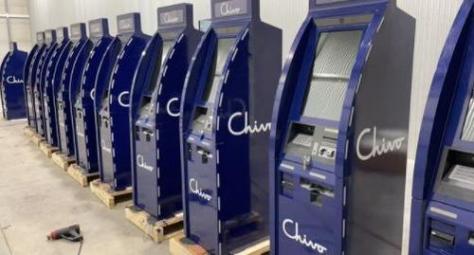
President Nayib Bukele shared his plans for the bitcoin rollout via social media on Sunday.
Bukele, who is the principal figure behind the country’s push to adopt bitcoin, said El Salvadorans will soon be able to convert their bitcoin to US dollars immediately once bitcoin is recognized as legal tender. To help facilitate this, there will be 200 bitcoin ATMs and also 50 bank branches capable of allowing them to swap their crypto for fiat, and vice-versa.
The “Chivo ATMs” (named after the government’s official bitcoin wallet, also called “chivo”, which is a slang term for “cool”) will eventually be “everywhere” Bukele said, allowing El Salvadorans to withdraw cash or make deposits 24 hours a day without paying commissions or paying any fees. The app will also allow Salvadorans abroad to send money – both dollars and bitcoin instantly to their relatives in El Salvador, saving them the hefty commissions that companies like Western Union demand. Fee-free remittances are expected to save the country some $400MM per year.
Transactions will be commission free, he said, adding that there will also be 50 financial branches across the country for withdrawing or depositing money.
Those who refuse to use bitcoin will still have the option of using the US dollar, which will become the country’s other official currency.
“What if someone doesn’t want to use Bitcoin?” said Bukele. “Don’t download the [Chivo] app and continue living your normal life. Nobody is going to take your dollars…Someone can always queue up at Western Union and pay a commission.”
Continued on source:
Source: El Salvador Installs 200 Bitcoin ATMs As Crypto Set To Become Legal Tender
I’ve been diving into cryptocurrency and I do not want any of you to miss out on the opportunity to learn more about Bitcoin and crypto for yourselves. I am all in when it comes to building businesses and being the entrepreneur that I am, but when it comes to finances, I am definitely out of my comfort zone. It feels like a movement going on around Bitcoin and crypto, and it would feel so wrong to not bring you, someone, I think you should definitely spend time researching, Michael Saylor. The once-in-a-lifetime opportunity that is accessible to nearly every single person cannot be disregarded out of ignorance. Michael is an MIT graduate and the CEO of Microstrategy and a self-appointed ambassador for the Bitcoin Movement, whose explanations of what Bitcoin is and why this is so important is one of the best I’ve heard in my own pursuit to better understand cryptocurrency. Listen, research, and do what is best for you, but I urge you to make an informed decision.
SHOW NOTES (easy to read on YouTube): 0:00 | Intro to Microstrategy 3:53 | Michael on Growing $16M Company 7:19 | Michael on Technology Risks 11:22 | Michael on First Principles Thinking 15:25 | Michael on Engineering Innovation 21:50 | Bitcoin Engineering Impinged Economics 25:51 | Shift in Wealth & Devaluing Currency 28:50 | Inflation Myth Debunked 34:26 | Hyperinflation Problems 38:24 | Michael on Why Cash Is Trash 43:03 | Michael on Beating Devaluation Of Cash 48:48 | Converting Weak Currency To Stronger 51:20 | Why Bitcoin Is More Desirable 1:05:11 | Bitcoin Volatility Isn’t A Problem 1:15:53 | Bitcoin Solution For Rich And Poor 1:20:57 | Is Bitcoin A Fad Or Secure Asset? 1:22:49 | Michael On Sustainable Energy & Elon Musk
QUOTES: “If you look at the design of a chambered Nautilus, what you see is nature’s solution for growth under pressure, and I think that’s how technology companies work.” [8:45]
“Bitcoin is the first point in human history where engineering impinged on economics, […] Bitcoin was the first time when we created a digital monetary asset, a pure digital token on a pure digital network..” [21:56]
“When you yourself can reason from first principles, now you can act at a moment of tremendous uncertainty.” Tom Bilyeu [23:50]
“I have to invest it in a strategy, which is going to appreciate faster than the money is devalued.” [40:07] “So the discount rate is jumping, which means the value of the cash flows into the future is collapsing.” [48:30]
“Bitcoin is the strongest asset the human race has ever invented, it’s like gold with none of the defects of goal.” [51:22]
“The volatility is the price you pay for the performance that you get, and oftentimes, the best investment idea isn’t the most comfortable investment idea” [1:05:24]
“It’s very rare that you find it a technology that’s the solution to every rich person’s problem and every poor person’s problem simultaneously.” [1:20:28]
Guest Bio: Mr. Saylor attended the Massachusetts Institute of Technology (MIT) on a full Air Force Reserve Officer Training Corps scholarship. While at MIT, he was a member of the Theta Delta Chi fraternity, and obtained dual degrees in aeronautics and astronautics as well as science, technology and society.
Follow Michael Saylor:
Website: https://www.hope.com/
Twitter: https://twitter.com/michael_saylor
Facebook: https://www.facebook.com/msaylor
Instagram: https://www.instagram.com/michael_say…
1:39 | Starting MicroStrategy 3:53 | Growing $16 million with risks 7:19 | Nature of technology risks 11:22 | First Principles thinking, intellectually fearless 15:25 | First Principles engineering 21:50 | Bitcoin, engineering economics 25:51 | Shift in wealth with devaluing currency 28:50 | Inflation myth debunked, unpacking the problem 34:26 | Hyperinflation in bonds, crypto, luxury items 38:24 | Cash is trash, how its losing value, and at what rate 43:03 | Money decomposition, Beating the devaluation rate of cash 48:48 | Converting weak currency to stronger assets 51:20 | What’s bitcoin, why bitcoin is more valuable and desirable 1:05:11 | Bitcoin volatility isn’t the problem 1:15:53 | Bitcoin accessibility for and solution for rich and poor 1:20:57 | Is Bitcoin a fad or secure asset? 1:22:49 | Bitcoin, sustainable energy and Elon Musk

Let me begin this article by saying I hope I’m 100% wrong. I know I am going to get a lot of pushback on what I am about to share here, but please remember this is just my opinion. I would also add that my family owns a relatively small amount of Bitcoin just in case I am wrong. Lastly, despite my concerns about the long-term viability of Bitcoin, as long as we stay above $20k, the December 2017 peak, I still believe it could go to $100k or higher before it finally runs out of steam.
With that out of the way, let me begin with my primary concern about Bitcoin’s long-term viability, and indeed, all crypto currencies:
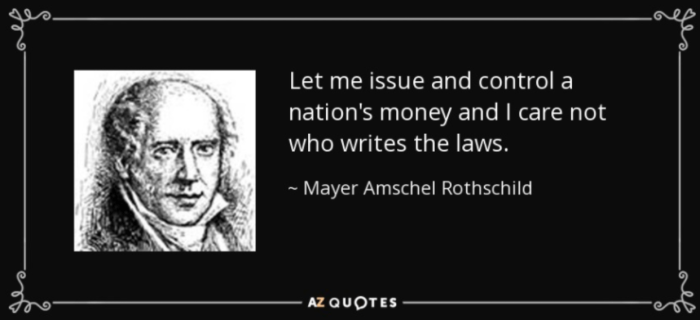
The source of central banks’ power is their total control of the world’s money supply. Do you honestly believe they’re going to allow anyone or anything to undermine that total control? I don’t, and I’m not alone in that view. From an interview with former Dallas Fed member, Danielle DiMartino Booth in 2017:
“Q. Would governments necessarily allow private-based cryptocurrencies to coexist with government-based cryptocurrencies?
Continued on Source: Bitcoin vs Gold

Authored by Mark Jeftovic via BombThrower.com,
Update: Apparently Elon tweeted this morning that Tesla has not sold the balance of their BTC.
As anybody following along so far knows, Elon says a lot of things….
If true his actions to lend credence to the idea that he’s now grappling with unintended consequences of shit-talking Bitcoin while deriving bulk of his realized and unrealized “earnings” from… Bitcoin.
Not exactly 4D chess, but hey, we’re just mere mortals.
As we detailed earlier, with Elon Musk pulling his notorious flip/flop on Bitcoin, a couple of theories hit me on what’s going on. The first is strictly a hunch and the second is inferred from just a quick look at the numbers.
Those theories are:
It’s one thing to put out a PR saying “We now accept crypto-currency X” and garner all the media hype around that, especially if you’re Elon Musk, and especially if you’re already long somewhere north of 42,000 BTC.
It’s another to actually be pulling in transactions in Bitcoin, given that doing so for a Tesla wasn’t exactly easy. Tesla didn’t disaggregate their revenues by payment type in their Q1 report and their only mentions of Bitcoin were that they bought it, sold 10% and booked over $100 million in profits from doing so (as anybody following Tesla knows, between the Bitcoin profits and the carbon credits, there wouldn’t be any earnings to report in the Q1 “earnings” call).
Nobody mentioned, or asked on the call how many vehicles sales had been actually transacted in Bitcoin. The only reference I can find anywhere that speaks to this at all is an anonymous employee in the aforementioned Coindesk article who said “Not quite sure if anything sold yet in bitcoin.”
My guess is that for some reason, knowing that zero or very few transactions were occurring in Bitcoin, Musk saw a chance at what he thought would be a cost-free virtue signal and took it. Who knows why, maybe he was crawling under his kitchen table with a head full acid as was rumoured to be the case about the infamous “funding secured” tweet.
Whatever the reason, it’s possible Elon didn’t envision the shitstorm this would cause in crypto circles, or maybe he did know and derives some manner of narcissistic supply from it. Maybe his cringeworthy flameout on SNL had him fuming and he wanted to take it out on the crypto-nerds while doubling down on Doge, who the hell knows.
What I do think is at some point Elon realized he’s still sitting on (checks calculations) about 38,000 to 40,000 BTC that were suddenly losing value rapidly. Now what?
This brings us to theory #2:
My math is that buying $1.5B USD of BTC over February would have been acquired at roughly 35K each, which comes out to 42,857 BTC, of which they reported having sold 10%, so roughly 4,200. That would leave around 38K Bitcoin sitting on the Tesla balance sheet becoming more impaired by the minute.
Volume lately has been anywhere around 22K BTC on a slow news day to > 65K BTC per day if people think there’s a reason to get excited about something and spikes up over 100K on newsworthy items like Coinbase DPO, hashrate flash crashes, et al…

Continued …
Source: Did Elon Musk Just Make Himself A Forced-Seller Of Bitcoin?
Here’s how to determine the fair market value of a currency that has appreciated faster than the shares of even the hottest technology stocks.
Bitcoin remains the leading decentralized cryptocurrency, which has over the past decade increased interest in potential applications using its core blockchain technology. Yet, in an extremely dynamic (and often volatile) market, Bitcoin has also found its fair share of competitors—including other digital tokens like EOS, Cardano, Ripple, and Ethereum (among many others)—all of which have experienced both bull and bear runs.
When it comes to digital currencies, there have been several methods to approach valuation. Most of these approaches differ in how one views the nature of a digital “coin.”
For instance, if one views Bitcoins as equivalent to stocks or bonds, pricing models appraise its expected value. Expected value is the discounted value attributed to an investment’s payoff in the future. Since Bitcoin does not pay dividends or interest, the expected value would be due to a strong belief in the underlying technology and its potential to be disruptive or even revolutionary. This would be a similar approach to valuing a start-up company or young tech stock that does not have any current earnings or profits. Once an expected value is forecast, one can start to make estimates about Bitcoin’s current fair value.
The value of a Bitcoin can alternatively be approached using the principles of supply and demand. Like any other market, the market for Bitcoin achieves price discovery through the interactions of a multitude of buyers and sellers. If there is a high demand that outpaces the number of new Bitcoins that are mined, this pushes up the fair price for Bitcoin.
Like many assets, there is only a limited supply of Bitcoin (21 million ever to be produced by the year 2140), but unlike other securities that have a finite supply, the new supply of Bitcoin cannot be increased by decree or vote among shareholders or boards of directors. Thus, the price of Bitcoin is fundamentally linked to its scarcity. This makes the value of Bitcoin more akin to a collectible, such as rare baseball cards or artworks.
A different angle on supply and demand looks to stocks versus flows. A stock-to-flow ratio looks at the currently available stock circulating in the market relative to the newly flowing stock being added to circulation each year. With Bitcoin, around every four years, the number of bitcoins found in each block mined is reduced by 50%. Each halving event thus increases its stock-to-flow ratio since less new supply is created relative to the outstanding stock.
Since Bitcoin’s inception, its price has tracked this growing stock-to-flow ratio; each halving Bitcoin has been accompanied by a bull market leading to new all-time highs.
Continued on Source: How Can Bitcoins Have a Fundamental Value?
points to ponder
Entertainment News & Everything In Between!
A Fan Blog in connection with TwinsBaseball.com.
the source for WordPress News, Tips and Help
points to ponder
points to ponder
Syntropy, Self Sovereignty and Radical Human Ecology
Taking personal action to end all animal exploitation by not eating, wearing or using animals
points to ponder
points to ponder
Manufacturing consent for private and public sector clients for over 250 years
points to ponder
points to ponder
points to ponder
Investigative reporting on globalism, Christianity, Islam, Judaism and where politics, culture and religion intersect.
points to ponder
points to ponder
 What's happening?