One of the most important steps on the journey of spiritual awakening is learning to recognize that you are not the thinking process. When we can clearly awaken to this reality we begin the journey of watching the mind, and consciously exiting out of it’s ongoing dialog.
Heart disease, cancer, type 2 diabetes, obesity, asthma, and hypertension are all huge risk factors for COVID-19 hospitalization and worse.
Do you know the #1 thing that determines your likelihood of having these chronic conditions?
I’ll give you a hint—it’s NOT your genes.
It’s the food on your plate.
Decades of scientific research has shown that with your food choices, you literally shape your destiny.
For example, simple changes in diet and lifestyle may help prevent more than 90% of type 2 diabetes, 80% of coronary heart disease, and 70% of colon cancer.
That’s impressive, isn’t it? So what steps can you take right now to decrease your risk, so you can fare better, and feel better?
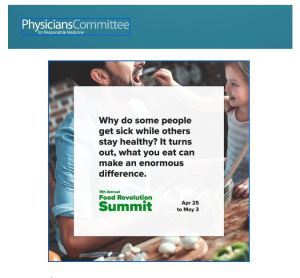
There’s a wildly popular online event starting soon that breaks down the science, answers critical questions, and gives you action steps to help you live your healthiest life.
From April 25–May 3, John and Ocean Robbins will interview 24 of the world’s top medical and food experts. I’m pleased to be included along with Matt McCarthy, MD; Joel Fuhrman, MD; Christiane Northrup, MD; Michael Greger, MD; Vandana Shiva, PhD; Daniel Amen, MD; David Perlmutter, MD; and many more.
If you want up-to-date information you can trust about food and health, then this is the place to be.
After all, in the time of COVID-19, your health is more important than ever.
The best part? Every interview is personally (and brilliantly) conducted by 2-million-copy best-selling author, John Robbins. I’ve been listening to his interviews for years, and I can tell you that you are in for a treat.
The convergence of evidence suggests that an affordable plant-based diet can help prevent and even reverse some of the top killer diseases in the Western world, and can be even more effective than medication and surgery. This could save Medicare billions of dollars, but medical training continues to underemphasize nutrition education , in part, perhaps, because lifestyle interventions go against the prevailing conventional wisdom. The USDA, in formulating its dietary guidelines, has been accused of both acting with bias and ignoring relevant research. However, the most recent guidelines take a step in the right direction by recommending a shift to a plant-based diet, which Kaiser Permanente, the largest U.S. managed care organization, has moved in the direction of supporting. Lifestyle medicine attempts to find, prevent, and treat the causes of disease. Patients should receive fully informed consent for treatment, meaning they should be informed about all of their options including dietary changes. Doctors report they don’t practice preventative cardiology because they fear their patients won’t change their diet.
Kim Allan Williams, MD, MACC, FAHA, MASNC, FESC was born in Chicago, and attended the College of The University of Chicago (1971 to 1975), followed by the University of Chicago’s Pritzker School of Medicine (1975 to 1979), internal medicine residency at Emory University (1979 to 1982), and overlapping fellowships in Cardiology at the University of Chicago (1982 to 1985), Clinical Pharmacology (1984 to 1985), and Nuclear Medicine (1984 to 1986). He is board certified in Internal Medicine, Cardiovascular Diseases, Nuclear Medicine, Nuclear Cardiology and Cardiovascular Computed Tomography.
Dr. Williams joined the faculty of the University of Chicago in 1986, specializing in clinical cardiology, nuclear medicine, and nuclear cardiology. He served as Professor of Medicine and Radiology and Director of Nuclear Cardiology at The University of Chicago School of Medicine until 2010. Among numerous awards and honors for his teaching in the medical school, residencies and fellowships, he was elected to Alpha Omega Alpha in 2008.
In 2010, he became the Dorothy Susan Timmis Endowed Professor of Medicine and Radiology and Chairman of the Division of Cardiology at Wayne State University School of Medicine in Detroit, MI. At Wayne State, he has started the Urban Cardiology Initiative – a program of education of physicians on disparities in healthcare, primary school education on cardiovascular health and community health screening in inner-city Detroit. In November 2013 he returned to Chicago as the James B. Herrick Endowed Professor of Medicine and Cardiology at Rush University Medical Center.
Dr. Williams has published numerous peer-reviewed articles, monographs, book chapters, editorials, and review articles in the field of nuclear cardiology and minority health issues, with emphasis on education and innovations in perfusion imaging and quantitation of ventricular function. His research interests include selective adenosine receptor agonists, fluorinated perfusion PET imaging, cardiac computed tomography for plaque characterization, health care disparities and payment policy, and appropriate use of cardiac imaging.
Dr. Williams has served on numerous committees and boards at the national level, including the American Society of Nuclear Cardiology (ASNC), the American Heart Association (AHA), the American Medical Association (AMA), the American College of Cardiology (ACC), the Certifying Board of Nuclear Cardiology, the Certifying Board of Cardiac Computed Tomography, the Society of Cardiovascular Computed Tomography and the Association of Black Cardiologists (ABC). He served as President of ASNC from 2004 to 2005. He served as Chairman of the Board of ABC from 2008 to 2010. He also served on the Cardiovascular Disease Examination Board of the American Board of Internal Medicine (ABIM-CV) until 2012. He served as the president of the ACC from 2015 to 2016.
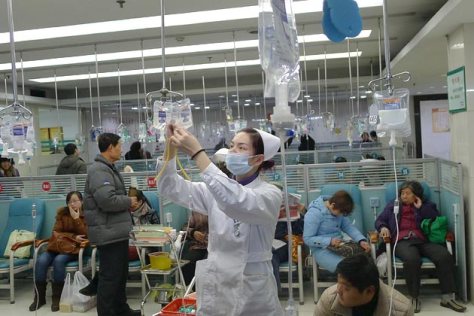
I live in China. This year, like every other, people with severely compromised immune systems were and are suffering from pneumonia. In early January 2020, in Wuhan, China – a place with dreadful air quality—hospitals started receiving patients.
In fact, for most of November, all of December, and most of January, the air quality index (AQI) was so bad that local governments regularly issued standard health warnings due to high levels of particulate matter. (At my school in Shanghai, if the AQI is over 150, children are cannot play outside. This is based on government advisories.)
And please be aware, far from hiding the problem, government officials in China at the regional and national level, readily provide daily and historical reports of the air quality index, noting particulate matter (PM2.5) and more. Thus we can track data for Wuhan — and most other large cities and urban areas — for the past six years.
Unsurprisingly, those diagnosed with severe forms of COVID-19 are the elderly and the immunocompromised. Additionally, people who have a host of pre-existing conditions are at higher risk. (NEJM March 30th, 2020). The Boston-based non-profit, Health Effects Institute, says anywhere from 500,000 to 1,250,000 Chinese die due to air pollution alone each year. (see pages 11-13). But the question discussed in this report is,
“When people have pneumonia or other respiratory difficulties, what are the best treatment protocols?”