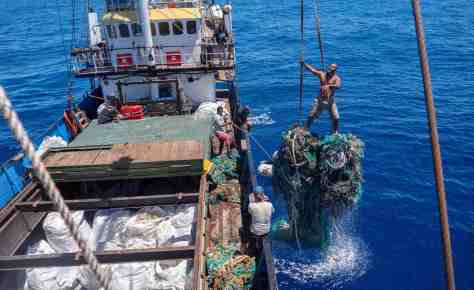
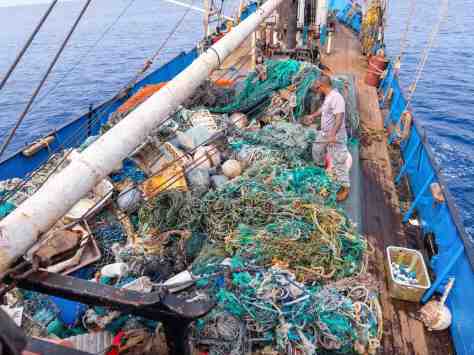
 Ocean Voyages Institute made history this week, removing 103 tons of fishing nets and consumer plastics from the Great Pacific Garbage Patch.
It more than doubled its own record-setting results from a 25-day stint last year during this 48-day expedition. And, Mary Crowley, the group’s founder and executive director, says they are headed back to sea in two days to collect more debris.
“I am so proud of our hard working crew,” says Crowley. “We exceeded our goal of capturing more than 100 tons of toxic consumer plastics and derelict ‘ghost’ nets—and in these challenging times, we are continuing to help restore the health of our ocean, which influences our own health and the health of the planet.”
Known as the ‘Ghost Net Buster,’ Mary Crowley is renowned for developing effective methods to remove significant amounts of plastics out of the ocean, including 48 tons (96,000 lbs.) of plastics during two ocean clean-up voyages in 2019, including one that scooped up nets that had trapped garbage around the Hawaiian islands.
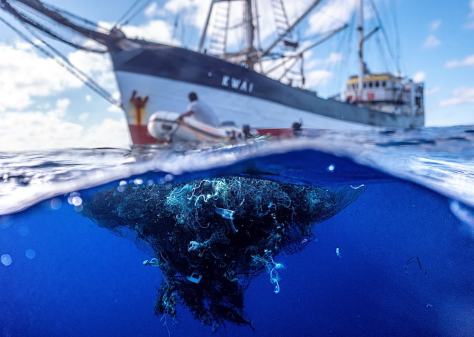
“Even though beach cleanups are the most efficient way to collect trash, ocean cleanup—intercepting it before it comes to the shore—is very important,” Dr. Nikolai Maximenko of FloatEco told GNN during a Zoom press briefing. “Nothing can replace the effort in the ocean.”
Aboard their cargo ship, the team has been using GPS satellite trackers since 2018, designed with the help of engineer Andy Sybrandy, of Pacific Gyre, Inc. Crowley’s theory proved successful that one tracker can lead to many nets. The ocean frequently ‘sorts’ the floating debris so that a tagged fishing net can lead to other nets and a density of debris within a 15-mile radius.
Continued: Hawaii Group Sets Record For Largest Haul of Plastic Removed From The Great Pacific Garbage Patch
 What's happening?